

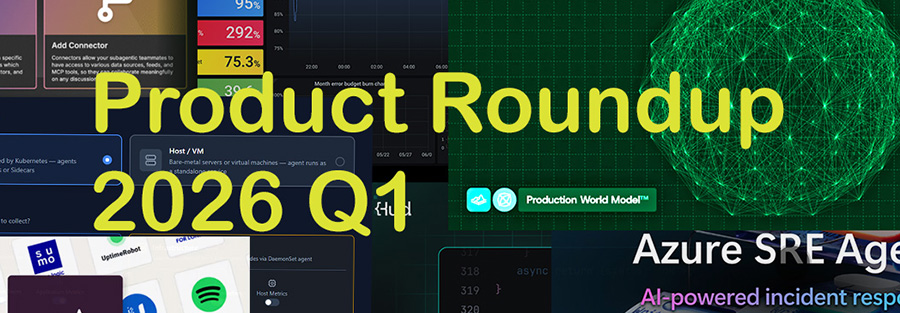
The AI SRE sector is currently a hotbed of innovation and rapid financial growth, characterized by a pivot toward deep contextual awareness and bespoke tooling. Leading this charge, Traversal have rolled out a new AI SRE product powered by what they call a "Production World Model." This approach builds a comprehensive, machine-readable digital map of the production environment, allowing the AI to contextualize signals and reason with a level of accuracy previously unavailable.
Meanwhile, New Relic have unveiled their Agent Platform, a no-code solution that allows domain experts to build and govern their own custom observability agents. The trend of "predictive engineering" is started to gain momentum. PlayerZero is a product which uses contextual modeling to predict if a specific pull request will trigger a production incident, a feat they claim to achieve with a 64% success rate in recent benchmarks.
While orchestration grows more intelligent, the underlying data backends are expanding to handle immense scale. Following a massive $400m funding round, ClickHouse recently acquired the LLM-observability platform Langfuse to bolster its AI offerings, while simultaneously rolling out a managed Postgres platform optimized to eliminate IO bottlenecks.
In a similar vein, OpenSearch 3.5 has introduced an "LLM-as-Judge" feature for search evaluation, alongside expanded Prometheus support that allows users to view metrics, logs, and traces in a single pane. Meanwhile, the niche market for high-vlume storage and querying continues to grow. The latest entrant is Lumi by Imply, branded as the industry's first "observability warehouse." By functioning as an offload location for sub-second queries over high-cardinality data, Lumi is already proving its worth at Roblox, where it ingests a staggering 86TB of data daily.
Elsewhere in the ecosystem, VictoriaMetrics has brought its VictoriaLogs service to General Availability, while Dash0 has strengthened its serverless credentials by acquiring Lumigo. This acquisition enables Dash0 to offer end-to-end visibility that spans Kubernetes, serverless architectures, and the LLM layers themselves.
There is also a growing emphasis on managing the sheer cost and complexity of telemetry data at the source. Edge Delta, for instance, has made a major pivot from being a traditional pipeline vendor to a hybrid observability platform. By utilizing "AI Teammates" running on the edge, they can now analyze unfiltered data in real-time before it is even sampled or sent downstream.
For those concerned with data sovereignty, Tsuga offers a "Bring Your Own Cloud" (BYOC) stack. Built by industry veterans, it runs as a managed Kubernetes stack within the user’s own cloud, keeping data in private S3 stores to eliminate vendor markups. This focus on "at-source" management is further supported by Clarvynn, an open-source tool that uses YAML policies within the application runtime to curate signals before they are even marshaled.To help engineers benchmark these systems, OllyGarden Thyme has emerged as a specialized stress-testing tool capable of pushing 100k logs per second to test the limits of OpenTelemetry Collectors. Meanwhile, open-source solutions like Sloth and OpenTelemetry Blueprints are tackling configuration toil by automating the generation of Prometheus SLOs and providing pre-defined templates for telemetry pipelines.
Finally, observability is pushing further "left" into the coding cycle. Representing a radical shift in how we think about interfaces, the Browser Dev Tools MCP is a visual debugger built explicitly for AI coding agents rather than humans, providing them with ARIA snapshots and Playwright-style expressions. Microsoft Foundry has followed suit with advanced observability for its AI platform, replacing point-in-time evaluations with continuous tracing of orchestration logic.
In terms of business alignment, Datadog Experiments now allows teams to run A/B tests on AI-driven changes, correlating technical telemetry with warehouse data like sales revenue. This deep integration into the development lifecycle is mirrored by Hud and Lightrun, which act as runtime code sensors and "keyholes" into live systems, bypassing the need for post-hoc log review. Rounding out this proactive posture is Eyer, a headless tool that utilizes AI anomaly detection and unique document context to reduce alert noise by up to 85%, allowing SRE teams to focus on systemic health rather than constant fire-fighting.
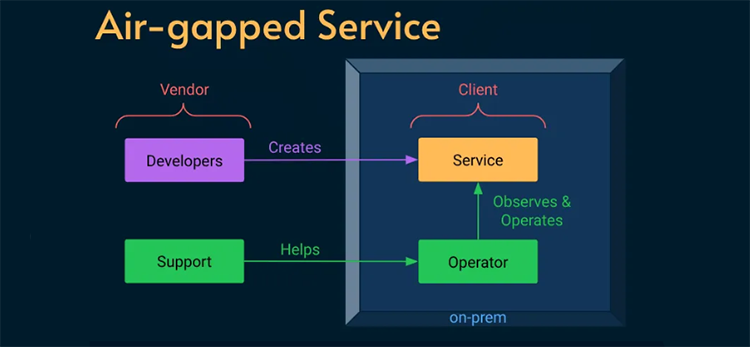
The excellent Alex Ewerlöf blog is now back in full swing and in this latest article he turns his attention to dealing with a real SRE curveball - how to build reliability engineering for an air-gapped system. We are talking hermetically sealed - not even a maintenance window for external connectivity. This task involved a high-security military facility where installing updates meant physically handing over an archive file to a system operator.
The constraints were pretty stringent - no logs, no metrics, no traces, no remote access of any kind.This was an extreme case and, ultimately, the solutions had to be both human-centred as well as relatively low-tech. How would you address the challenge? Hit the link below to read about the solution that Alex put in place.

In the past month or so the GitHub platform suffered a number of well-documented outages which resulted in loss of service for users. In the spirit of transparency, GitHub CTO Vlad Fedorov published this article on the GitHub blog, explaining the causes of the outages and the lessons learned as well as detailing the remediations that GitHub engineers will be putting in place.
The article really brings home the challenges of orchestrating the components of a global technology infrastructure - as well as the compounding effects of working at very large scale. The investigation revealed a perfect storm of edge cases, hidden tipping points and unforeseen knock-on effects. It’s impossible not to feel for the engineers sweating in the war-rooms as the dramas unfolded - after all, watching your failover fail must be pretty gut-wrenching.
If the Observability world had a code of secrecy akin to that of the Magic Circle, then Charity Majors might be in danger of being banished to exile and ignominy. In a single slide deck, she has blown the gaff on a whole trove of insider knowledge. It is the “What they don’t teach you at Harvard Business School” of observability knowledge. Not the abstract theory or technical detail but lessons and insights from the o11y frontline.
The deck in question was used in a talk at the LeadDev event in Berlin earlier this month and its 52 slides are an illuminating distillation of observability wisdom. We actually weren’t present at the talk and only came across the deck thanks to a mention in Michael Hausenblas’s excellent olly news newsletter. However, the slides contain sufficient clues (and images of unicorns) to easily re-construct the narrative and win friends and influence people as an observability savant.
If you are an SRE, when an outage happens you will know about it pretty quick. With security breaches the picture is rather less clear as, by their nature, they are designed to go undetected. Intrusion detection therefore is often based on a mixture of tools designed to spot unusual spikes, suspicious patterns or failed logon attempts.
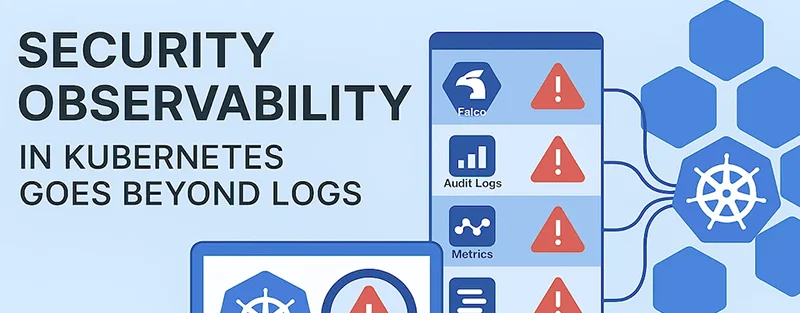
This article by Fatih Koç argues that one of the major difficulties involved in identifying attacks is that of correlating signals across multiple sources such as Falco, Prometheus, Kubernetes Audit Logs etc. In this article, he outlines a strategy for extracting relevant data from each of these sources and pulling it together into a single observability dashboard.
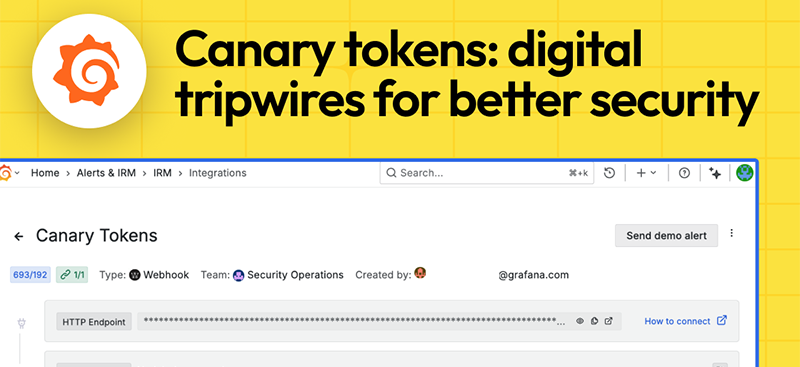
The first line of cyber defence is normally at the perimeter - preventing attackers from entering your network in the first place. The next line of defence is intrusion detection. This can often take the form of anomaly detection using a variety of heuristics.
There are also some more creative possibilities, such as the canary solution adopted by Grafana. Just as the canary in the coalmine sings to alert underground workers to the presence of toxic gases, Grafana’s canary was designed to alert them to the possible presence of intruders in their domain.
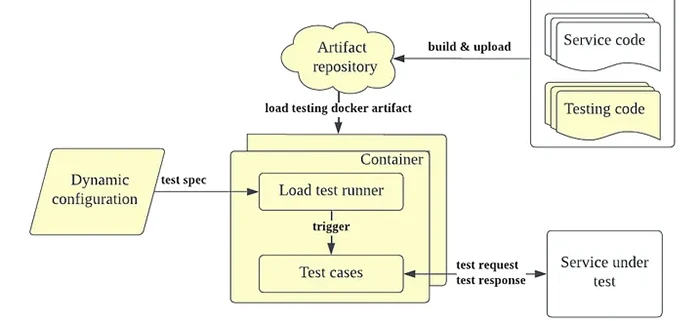
Load testing can be simple in theory but in modern distributed architectures, it involves a lot more than throwing requests at an individual service. This article on the Airbnb engineering blog looks at how the company’s engineers use the Impulse load-testing framework to handle a number of more complex requirements such as dependency mockingand managing messaging and asyncronous calls.
Unfortunately, at the moment Impulse is just an internal Airbnb framework, so you won’t be able to get your hands on it at present. At the same time, the article provides a valuable blueprint for tackling advanced, real world load testing scenarios.
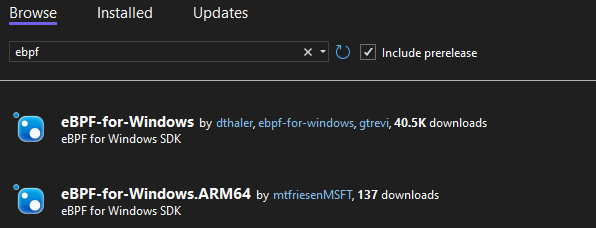
It's an announcement that might have seemed unthinkable not long ago, but the porting of the revolutionary eBPF technology to Windows is now a reality. The ability to bring safe programmability to the kernel has resulted in enormous gains in fields such as security, networking and observability for Linux hosts, so applying the same principle to the Windows ecosystem is obviously an attractive proposition. It is not, though, without its own difficulties. There were a lot of hurdles to overcome and, inevitably, given the differences in OS architecture, this is not a full-fidelity replica of the Linux implementation.
This possibly foundational article by Pavel Yosifovich guides you through the steps involved in boldly going where few have gone before and creating your first eBPF program for Windows. One paragraph in the article begins with the sentence “this is where things get a bit hairy“ - for some that will likely be a challenge rather than a deterrent. This may not be cooking up nuclear fusion in your bedroom, but it does feel pretty radical.
As well as rolling out their Open AI observability solution, Elastic have also been very active within the OpenTelemetry project. C++ has a reputation for being something of a fearsome foe for observability practitioners. In this article on the Elastic blog, Haidar Braimaanie dons his protective gear and attempts to tame the beast with a soothing dose of OpenTelemetry instrumentation.
Unlike languages built in frameworks such as .NET, C++ does not have a standardized runtime environment that supports dynamic instrumentation across all platforms and compilers. C++ also uses a variety of build systems such as Makefiles and CMake, so that implementing instrumentation can be difficult and error-prone. In the article, Haidar looks at adding OpenTelemetry support to a C++ application running on Ubuntu 22.04. He also includes sample code for instrumenting the project with database spans and then observing the application in APM.
After reading this article you may want to give the C++ developer in your life a hug.
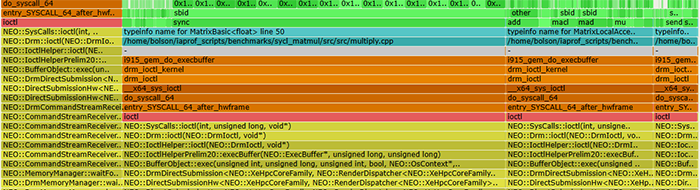
Even if you are not familiar with the name of Brendan Gregg, you are almost certainly familiar with the fruits of his labours. Brendan is the creator of the Flame Graph - one of the most important and iconic visualisations in the observability toolkit.
We featured the Flame Graph in our recent tribute to the work of UX designers in the observability arena - but you should also visit Brendans’ web site.
Brendan's latest innovation is the AI Flame Chart. This is an evolution of the original flame graph and its ambitious aim is to help reduce the vast financial and environmental costs entailed in the use of LLM’s. This means that whereas the original flame graph was focused on CPU cycles, the latest generation sets its sights on reducing GPU load. The article discusses the considerable complexities involved in mapping GPU programs back to their corresponding CPU stacks.
The names of some of the instruction sets look intimidating to the uninitiated but the basic concept of the graph is quite simple - the wider the bar, the more resource it consumes.
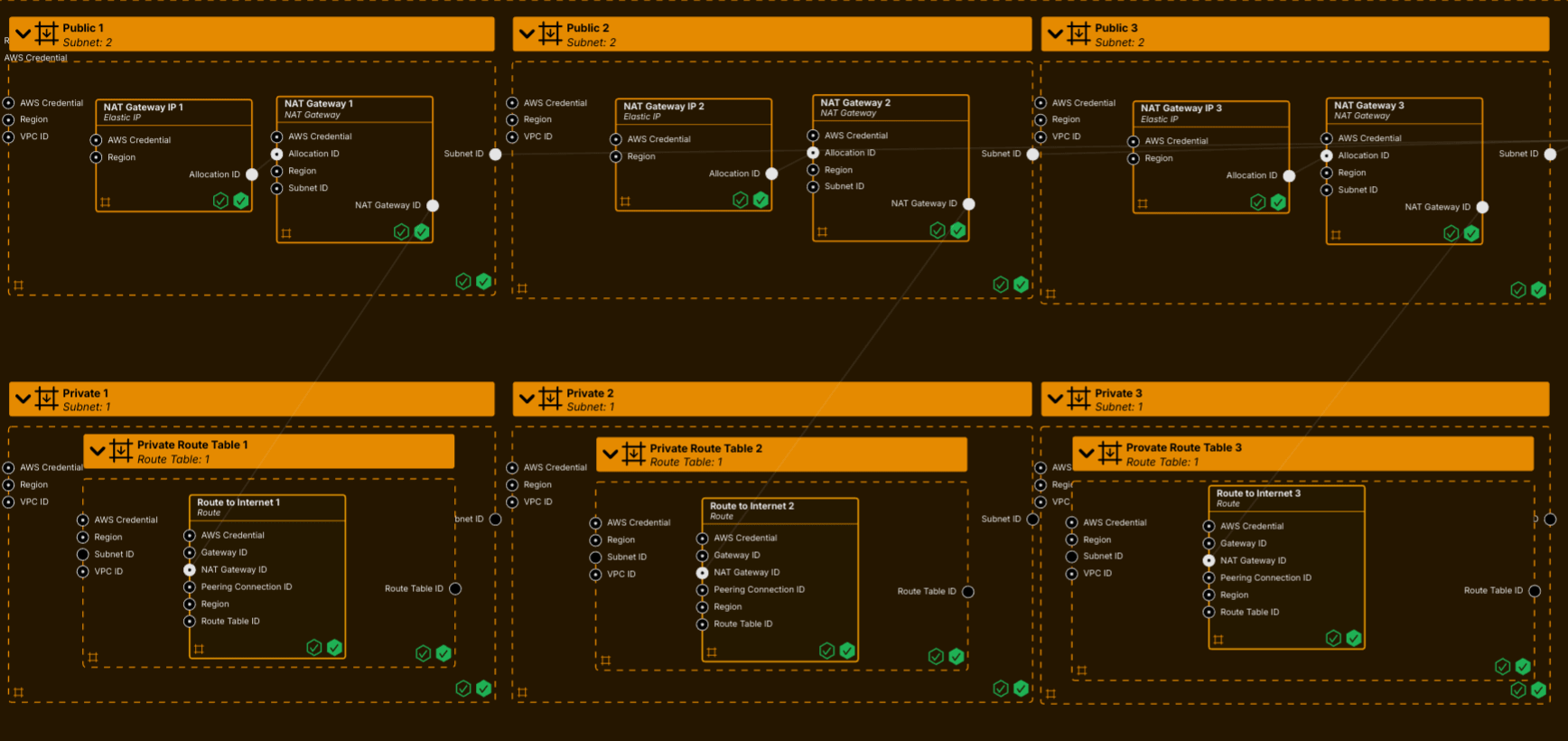
If you have ever had to grapple with a 3,000 line Helm chart to deploy your observability infrastructure, you may be forgiven for thinking that there must be a better way to do this. Whilst YAML has a certain formal elegance, its syntax struggles to express the architectures and relationships embedded in highly complex systems.
Whilst Pulumi have tackled this problem by enabling the use of high level programming languages for IaC, System Initiative are taking a fundamentally more radical approach. Their goal is nothing other than completely reinventing IaC from the ground up. The blog article for the launch of the product is an incredibly ambitious statement of intent. The terms ‘game changer’ and ‘paradigm shift’ tend to be thrown around somewhat casually, this might be a case where their usage is appropriate.
So, what are they proposing? Well, System Initiative is IaC without the code. It is a kind of digital canvas where you manipulate digital twins of your systems. Is the future here or is this the Platform Engineering equivalent of science fiction? Read the article and decide for yourself!